Portugal has spent decades establishing itself as one of Europe's leading footwear manufacturing centers. Its factories supply international brands, its products reach markets around the world, and its industry has increasingly competed on quality, technical expertise and design rather than price alone.
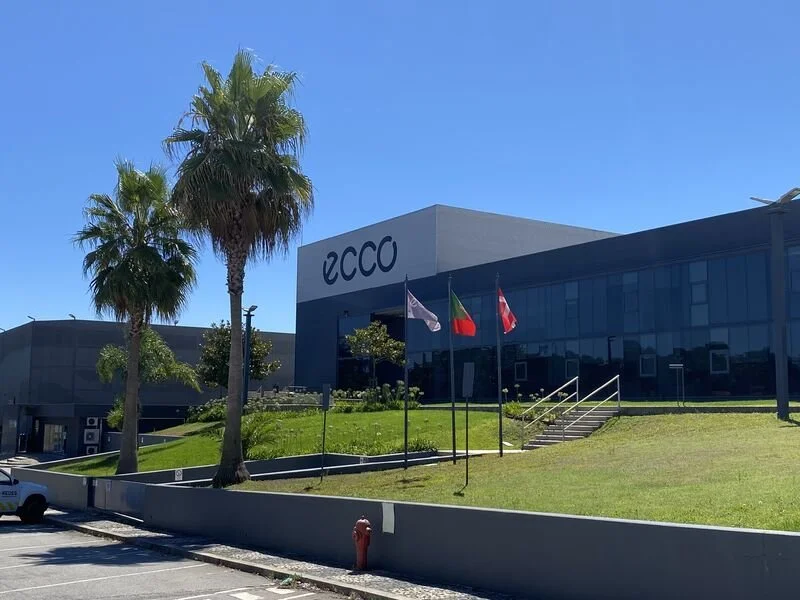
Yet the closure of Ecco's factory in São João de Ver, in the municipality of Santa Maria da Feira, exposes a vulnerability behind that success. The Danish footwear company's decision will cost 632 people their jobs and bring an end to more than four decades of manufacturing at a site that was once one of Portugal's largest footwear producers.
The question is not whether Portugal can make shoes. It has repeatedly demonstrated that it can. The question is whether it can retain the factories, skilled workers and industrial knowledge that make its international reputation possible.

A Manufacturing Success Story Meets An Uncomfortable Reality
Ecco's Portuguese factory opened in 1984 as the company's first production facility outside Denmark. At its peak, it employed around 1,700 people. Its closure is part of a wider restructuring that also affects production in Vietnam and operations in Denmark. Across the group, between 2,432 and 2,632 positions are expected to be affected.
The timing is particularly striking given Portugal's position in the international footwear market. According to APICCAPS, the Portuguese footwear industry association, Portugal remained Europe's second-largest footwear producer in 2025. The country exported approximately 68 million pairs worth €1.72 billion, with around 93% of production destined for international markets.
These figures demonstrate the industry's international reach, but they also expose its vulnerability. Portugal depends heavily on foreign demand, international buyers and the decisions of companies operating across multiple manufacturing locations. A factory can have experienced workers, advanced equipment and decades of production history and still lose out when a multinational reassesses its global capacity.
Why Ecco Is Closing Its Portuguese Factory
Ecco attributes the closure to excess global production capacity, saying its manufacturing network is significantly larger than current and expected sales require. The company has also stressed that the decision does not reflect the performance of the Portuguese operation or the professionalism of its workforce. Its retail stores in Portugal will remain open.
The commercial backdrop, however, is difficult. Ecco reported revenue of approximately €1.49 billion in 2024, down 5% year over year, with profitability below expectations. Local reporting by Observador also describes accumulated inventory, declining sales and previous rounds of restructuring.
Another issue is the company's decision to remain in Russia following the invasion of Ukraine. In 2022, several Danish retailers and online platforms stopped selling Ecco products because it continued operating its Russian stores. Workers interviewed by Observador believe the controversy damaged the company's reputation and sales. While this provides important commercial context, there is no evidence that it was the direct cause of the Portuguese factory's closure.
Ecco is also closing its production facility in Vietnam, while its factories in Thailand and Indonesia are expected to remain operational. Workers interviewed by Observador argue that Asian factories can produce footwear at a lower cost. Ecco has not, however, confirmed that production from Portugal will be transferred to either country, nor has it disclosed where the Portuguese factory's machinery will go.
The distinction matters. This is a global restructuring, not a confirmed transfer of the Portuguese operation to Asia. But it raises a difficult question about the economics of manufacturing in Europe and the ability of Portuguese factories to remain competitive within multinational production networks.
The Cost Of Losing More Than 600 Jobs
The consequences extend beyond the immediate loss of employment. Ecco's factory represented decades of accumulated production knowledge, technical capabilities and experienced workers. That expertise is not easily replaced.
The site had also received investment in new machinery shortly before the closure, including robotic equipment, according to employees interviewed by Observador. The apparent contradiction between recent investment and the decision to shut down has left workers questioning how a factory that seemed to be developing could become surplus to the group's needs.
There is a wider economic impact, too. A large factory supports an ecosystem of suppliers, service providers and businesses that depend on the spending of its employees. Santa Maria da Feira's mayor has warned of the consequences for other companies in the municipality. Observador has also reported concerns about the impact on local suppliers, although the precise exposure of individual businesses has not been independently established.
When a factory of this scale closes, the loss is not limited to the people who receive redundancy notices. It affects the industrial network around it and removes production experience that may have taken generations to develop.
Portugal's Competitive Advantage Is Not Guaranteed
Portugal's footwear strategy has increasingly depended on capabilities that are harder to replicate than low production costs: technical expertise, flexibility, quality control and product development. There are opportunities in more specialized segments, too. Technical footwear exports increased by 14.5% in 2025, reaching €213 million, according to figures from Portugal's National Statistics Institute reported by AICEP.
But moving toward higher-value production requires sustained investment in technology, skills and workforce development. It also requires a business environment in which manufacturers can compete internationally without relying solely on their ability to absorb rising costs.
For factories owned by multinationals, there is an additional vulnerability: local performance is only one consideration in a group's global capacity decisions. A factory may be efficient, experienced and strategically important to its surrounding community, yet still be evaluated against production facilities in other countries.
This is the tension Portugal must address. Its international reputation is built on manufacturing capability, but that reputation alone does not guarantee that investment will remain in the country.
Can The Industry Protect Its Manufacturing Future?
The Ecco closure does not mean Portugal's footwear industry is collapsing. Its export performance suggests a sector that remains internationally competitive. But it does expose the limits of relying on reputation as a guarantee of industrial resilience.
The challenge ahead is not simply to sell more shoes abroad. It is to ensure that the value created by manufacturing in Portugal gives companies a compelling reason to keep investing, producing and employing people there.
That means strengthening the capabilities that differentiate Portuguese production, developing the next generation of skilled workers and building an industrial ecosystem that can withstand changes in global demand and corporate strategy.
Portugal has proved that it can make shoes for the world. The harder question is whether it can ensure that the factories, people and expertise behind those shoes have a future in Portugal, too.