On 4 November 2026, Sébastien Meyer and Arnaud Vaillant announced that Coperni SAS would cease operations. After months of conflict with Tomorrow, the London group that became the brand’s majority shareholder and exclusive distributor in 2019, the founders said they had been unable to find a solution. Their statement ended with three words: “See you soon.”
For a label that built its identity around innovation, experimentation and the possibilities of what fashion could become, the announcement marks an unexpected end to a relatively short but influential chapter in Paris fashion.
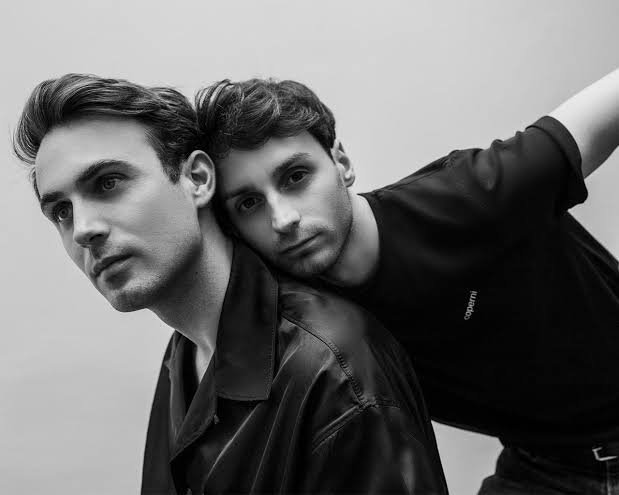
The story began in 2009, when Meyer and Vaillant met at Mod’Art International in Paris. Their backgrounds were different but complementary. Meyer studied fashion design and pattern making, developing the creative vision behind the clothes, while Vaillant studied fashion business and management. Vaillant also gained experience at Chanel and Balenciaga before the pair launched Coperni Femme in 2013. The name was inspired by astronomer Nicolaus Copernicus, whose theory that the Earth revolved around the Sun changed how people understood the universe.
The young label quickly attracted attention. It won the ANDAM First Collections Prize in 2014 and became a finalist for the LVMH Prize the following year. Then came an opportunity that would temporarily change its trajectory. In 2015, the duo were appointed artistic directors of Courrèges, the French fashion house founded by André Courrèges and known for its futuristic approach to design. They put their own label on hold, spending two years working with the house’s heritage before leaving in 2017.
When Coperni returned in 2018, it had a clearer identity. The name was shortened, the collections became more focused, and the aesthetic combined Parisian minimalism with an interest in technology, science and modern materials. The designers were interested in making clothes that looked effortless but had something unexpected beneath the surface. The Swipe bag, inspired by the movement of unlocking an iPhone, became one of the brand’s defining products.
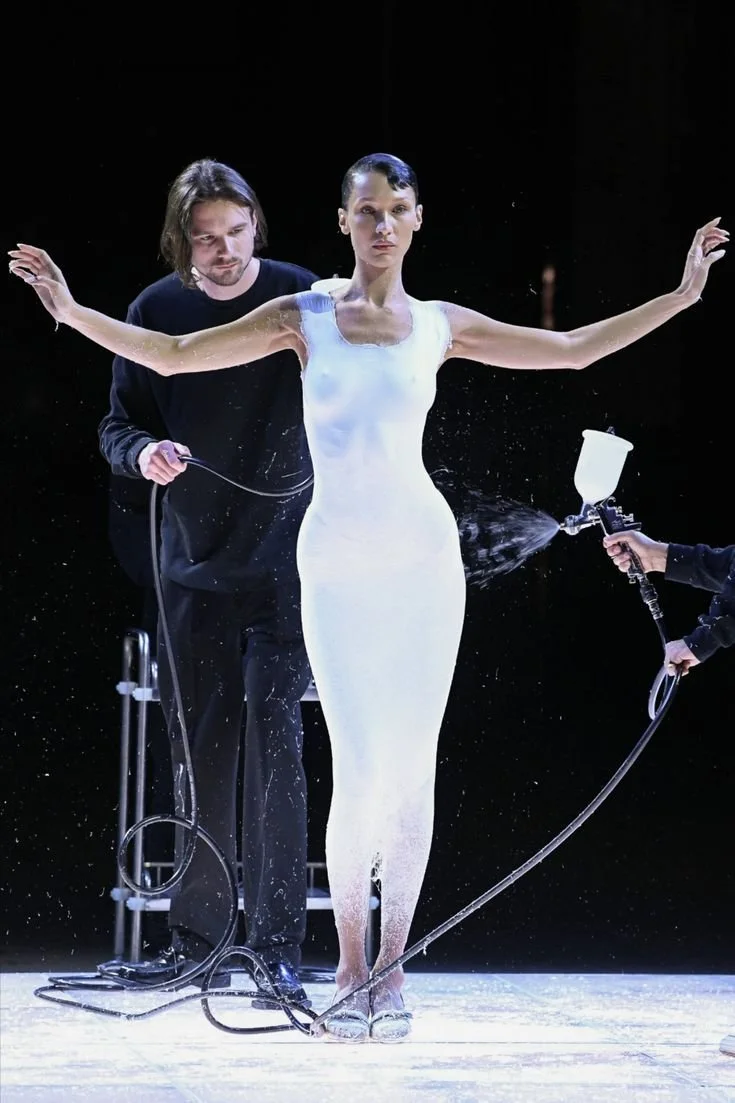
Coperni also understood the power of fashion as a visual event. In 2022, its Spring/Summer 2023 show ended with Bella Hadid standing on the runway while a dress was sprayed directly onto her body using Fabrican technology. The moment travelled far beyond the fashion industry, becoming one of the most widely shared runway images of the year. A few seasons later, the brand presented its Spring/Summer 2025 collection at Disneyland Paris, with Kylie Jenner appearing in a princess-inspired black gown.
These moments made Coperni recognisable, but they were part of a wider design language rather than the entirety of it. Its collections explored technical fabrics, sculptural silhouettes and the relationship between clothing and technology. The brand had built a reputation for making the future feel wearable.
The business behind that vision, however, was becoming increasingly complicated. Tomorrow took a majority stake in Coperni in 2019 and became its exclusive distributor. By February 2026, the founders had withdrawn from Paris Fashion Week, saying their dispute with the group had left them without the means to sustain the brand’s development. Coperni entered judicial reorganisation in June, while attempts to find a buyer followed. The founders ultimately failed to reach an agreement that would allow operations to continue.
There is also a question of ownership beyond the closure itself. The Coperni trademark is held by a separate UK company, Coperni UK Ltd, meaning the future of the name is not necessarily tied to the fate of the French operating company.
Coperni’s closure should not be reduced to a warning about the limits of viral marketing. It raises a more fundamental question about the fashion business: what happens when the people who create a brand no longer have control over the structures that allow it to exist?
Meyer and Vaillant have made clear that they still have ideas to explore. Whether those ideas will ever carry the Coperni name again remains uncertain. For now, the brand that spent a decade imagining fashion’s future leaves behind a more complicated question about who gets to own it.