Fashion loves a movement. It gives designers a shared identity, creates a story for the industry to follow and, eventually, turns a moment in fashion history into mythology. Few examples illustrate this better than the Antwerp Six.
In 1986, six young Belgian designers presented their collections at the British Designer Show in London. Ann Demeulemeester, Dries Van Noten, Walter Van Beirendonck, Dirk Bikkembergs, Dirk Van Saene and Marina Yee had all studied at the Royal Academy of Fine Arts in Antwerp. Their appearance attracted international attention, putting both the designers and their hometown on the fashion map.
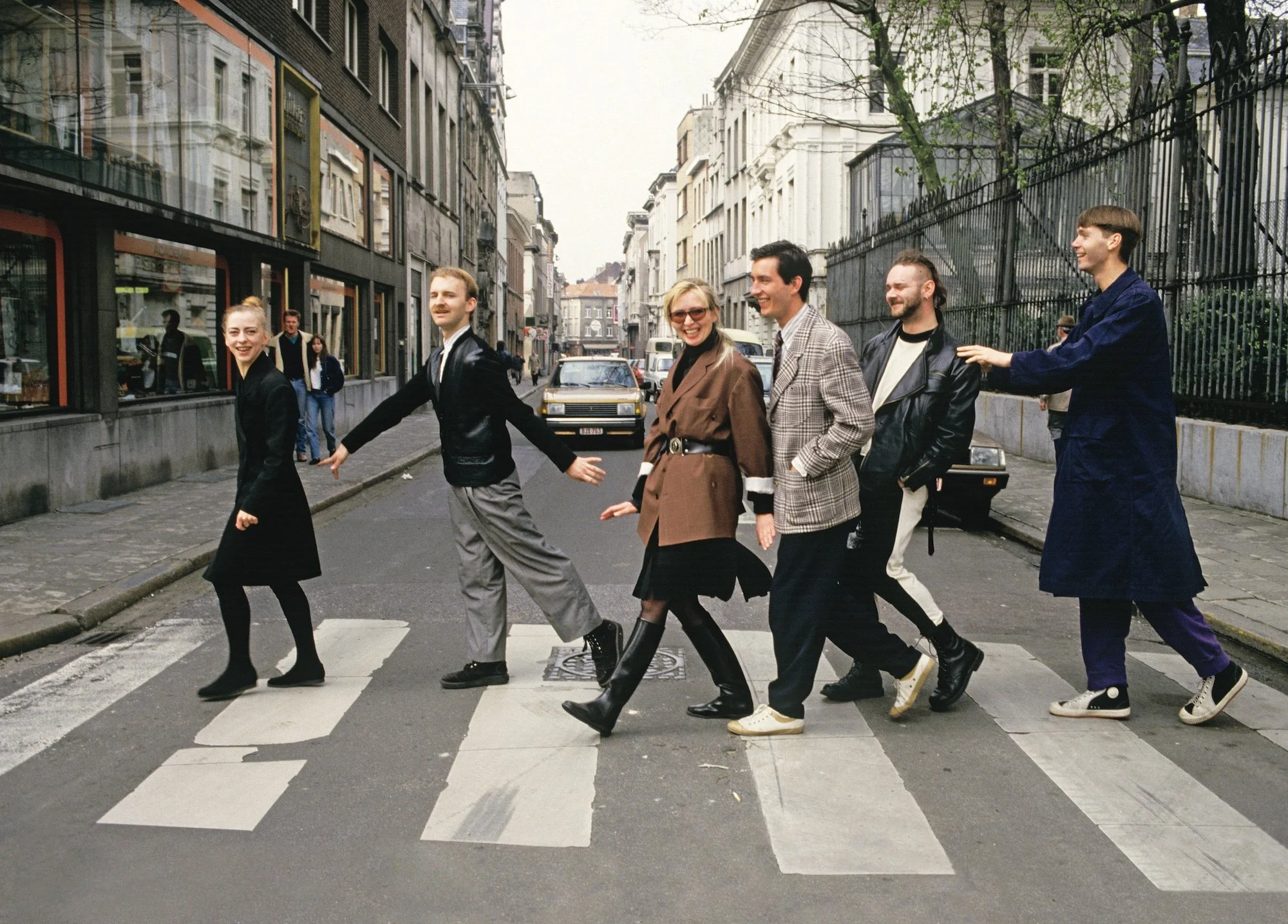
The name 'Antwerp Six' was not originally a carefully constructed creative collective. It was a label adopted by international journalists and buyers, reportedly because the designers' Dutch names were difficult to pronounce. What followed was one of fashion's most influential stories: six individual designers becoming synonymous with an entire city's creative identity.
Now, forty years later, filmmaker Reiner Holzemer is revisiting that history in The Six, a new documentary bringing the designers' personal accounts together for the first time on film. Rather than simply celebrating their influence, the documentary explores the relationships between them and questions how much of their collective identity was real, and how much was created by the fashion industry.
It is an interesting distinction. Their work was never a single aesthetic. From Demeulemeester's romantic darkness to Van Beirendonck's experimental approach and Van Noten's intricate relationship with print and textiles, each designer developed a distinctly individual language.
The documentary arrives alongside a major exhibition at Antwerp's MoMu Fashion Museum, marking forty years since their international breakthrough. Running until 17 January 2027, the exhibition brings their work together while highlighting the individual trajectories that followed.
Perhaps the most interesting part of revisiting the Antwerp Six is recognising that their influence was never dependent on being alike. Their shared education and international breakthrough created a moment, but their individual creative identities sustained their careers.
In an industry that constantly looks for the next big collective, the story offers a useful reminder: sometimes what makes a movement influential is not a shared aesthetic, but the fact that it gives very different voices the opportunity to be heard.