By Victoria Kather
An Antwerp design studio builds an entire room from solid cork blocks in the Alentejo, and the international design press takes notice. The project is striking, the architecture is considered and the photographs are beautiful. But there is something worth remembering: Portugal has been experimenting with cork design for decades. So what makes this particular project interesting, and why does a familiar material continue to capture the imagination of the international design world?
The Still Room, created by Studio Corkinho at Casa No Tempo, is constructed from solid cork blocks stacked together and secured with metal rods, without glue or screws. The structure can be dismantled and rebuilt elsewhere. Portuguese manufacturer Sofalca supplied the cork, bringing local manufacturing expertise into an architectural project conceived by an international studio.
It is an impressive use of cork, but certainly not its first appearance in contemporary design.
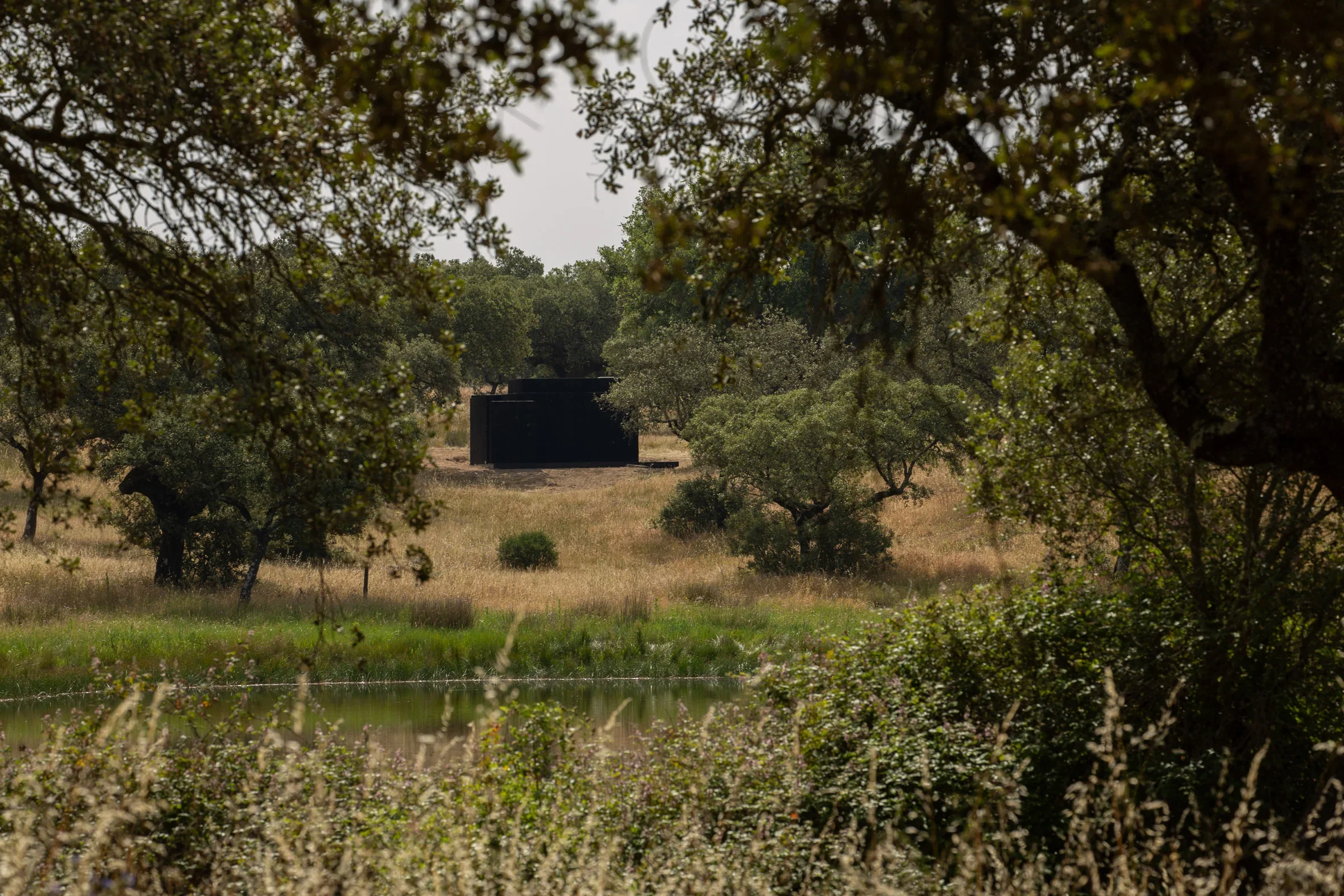
Mercês Tomaz Gomes, via Dezeen
Portugal Has Been Here Before
Portugal's relationship with cork and design goes well beyond wine stoppers. For years, local designers, manufacturers and researchers have explored its potential across furniture, interiors, architecture and everyday objects.
In 2008, the Design Cork project brought together 50 designers to investigate new applications for the material, presenting 38 prototypes at Lisbon's Berardo Museum. Corque Design followed with a collection of contemporary cork furniture and accessories, which made its international debut at Milan Design Week in 2009. In 2011, the Materia collection, developed with Amorim and curated by ExperimentaDesign, brought together 21 objects by ten designers, six of them Portuguese.
There have been other collaborations since. Blackcork, developed by Sofalca and designer Toni Grilo in 2014, explored expanded black cork through furniture and lighting. Cork composite has also found its way into public spaces, including the Lisbon Metro, where it was tested as a material for seat coverings.
These are not isolated experiments. They reflect a sustained effort to take a material deeply connected to Portugal's industrial history and explore what it can become in contemporary design.
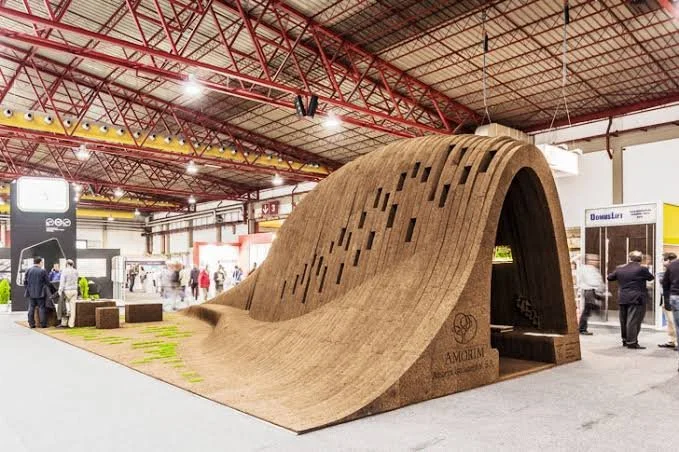
Joao Morgado - Fotografia de Arquitectura, Creator: Joao Morgado
What Changes When Cork Enters the World of Luxury Design?
Perhaps the interesting part of the Casa No Tempo project is not the material itself, but the role it has been given.
For decades, cork has been used in Portugal for everything from insulation and flooring to furniture and everyday objects. Its qualities are well understood, and its design potential has been explored by generations of Portuguese manufacturers and designers. At Casa No Tempo, however, cork is no longer a component of a larger design. It is the entire architectural proposition.
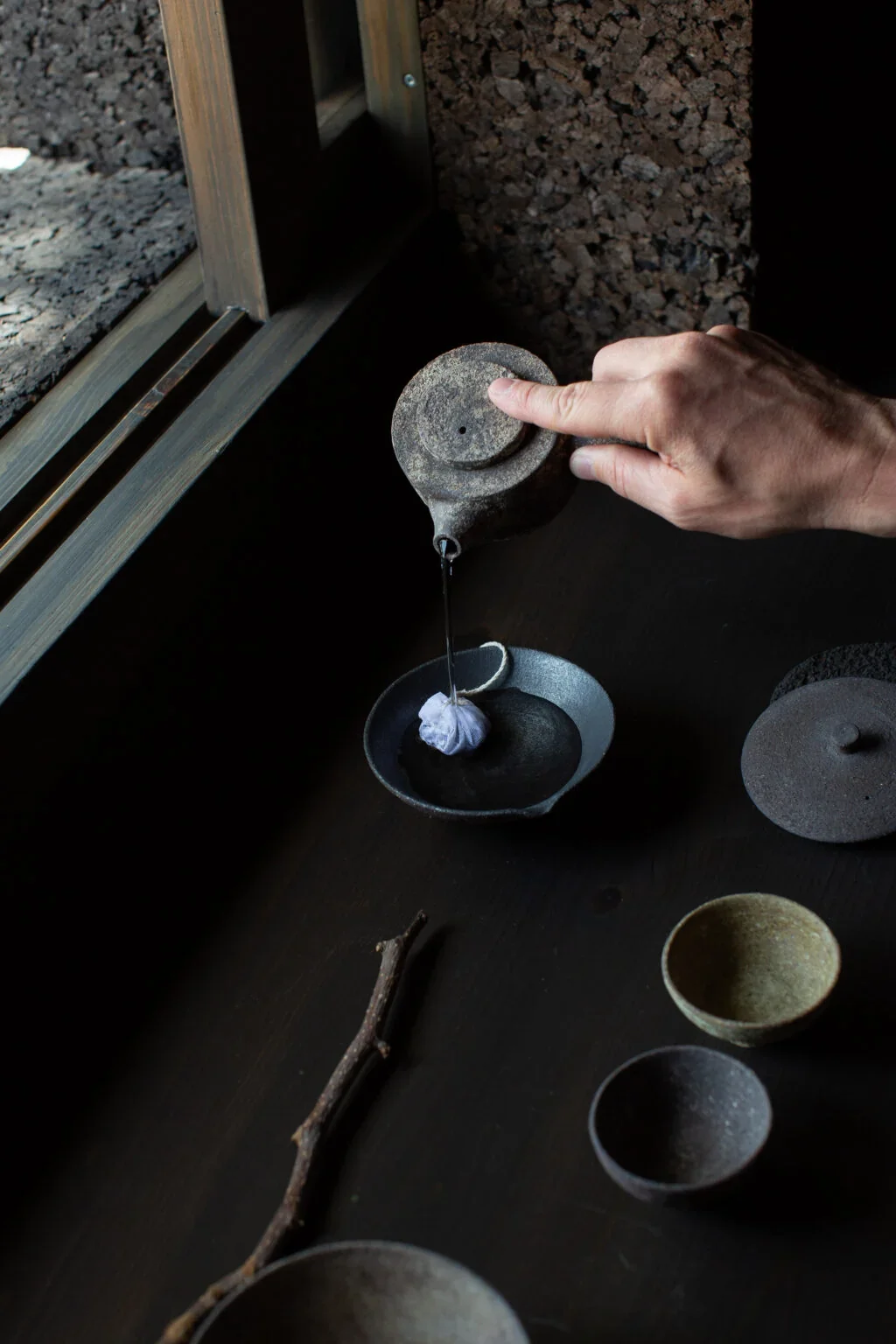
Mercês Tomaz Gomes, via Dezeen
And that distinction matters.
There is a particular language surrounding luxury design. Materials are discussed in terms of their origin, craftsmanship, rarity and relationship with a space. Their technical properties become part of a much bigger story about architecture and experience. Cork, which is often discussed in industrial or functional terms, enters that conversation in an entirely different way.
The Still Room is a good example of this shift. Its construction makes the material impossible to overlook. The blocks, their texture, their scale and the way they come together are the design. The project takes something familiar and gives it a new context, without needing to claim it has discovered something entirely new.
And perhaps that is precisely where the opportunity lies for Portuguese cork. Not in constantly reinventing a material that already has a rich design history, but in continuing to find ambitious ways to put it in front of new audiences. Projects like this bring together international creative practices, Portuguese manufacturing expertise and a setting that gives the material a compelling new expression.
The result is not a rediscovery of cork. It is a reminder of how much more there is to explore.