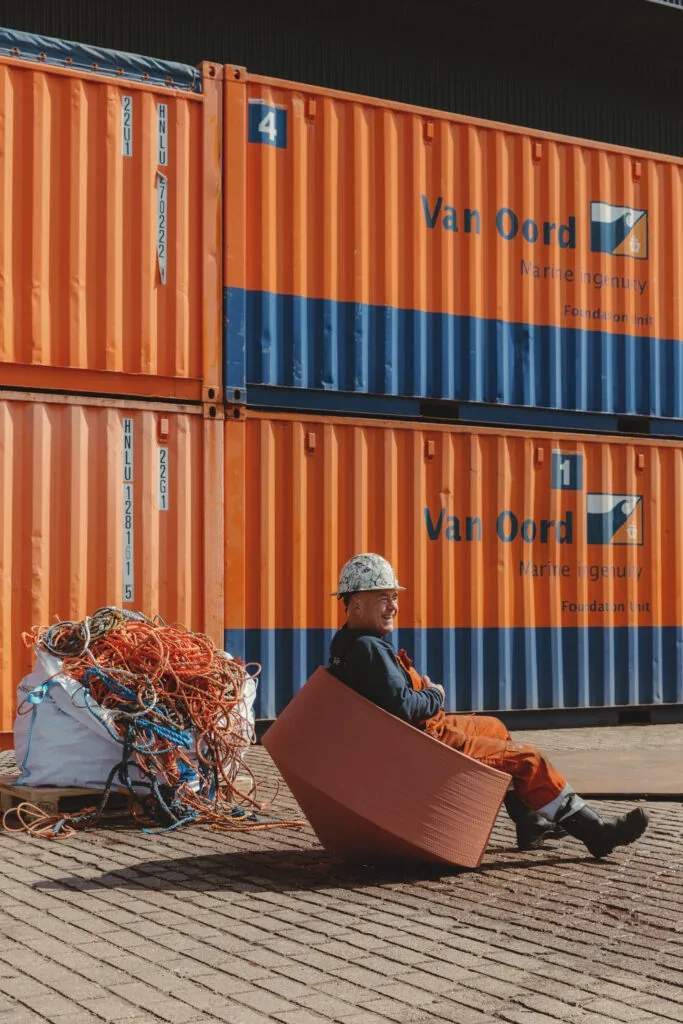
What happens to the ropes used to secure boats once they reach the end of their working life? Rotterdam design studio The New Raw has found a second use for them, transforming discarded marine rope into a collection of rocking stools inspired by the buoys found along the waterfront.
Called Buoy, the project turns plastic rope collected from Rotterdam harbour into 3D printed public seating. The collection was shortlisted for a 2026 Dezeen Award in the sustainable design category, bringing attention to an approach that combines material reuse with a strong connection to place.
Courtesy of The New Raw
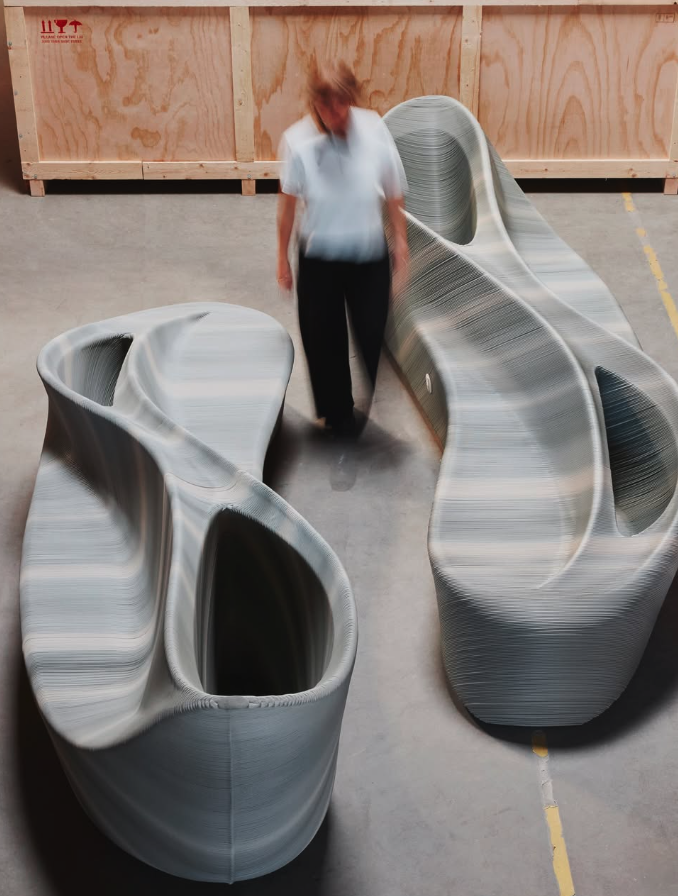
The process begins with waste collected locally. The ropes, previously used to manage boats, are transported to Maastricht, where they are cleaned, shredded and mechanically recycled into plastic pellets. These pellets then return to The New Raw’s Rotterdam studio, where they are melted and 3D printed layer by layer into the finished stools.
The material itself presents a challenge. Marine ropes can contain mixtures of materials and accumulate residues over time, meaning not every rope is suitable for recycling. The studio selects ropes with a high polypropylene content to produce the pellets. The resulting stools contain no virgin plastic, although a small amount of additives, including UV protection, helps them withstand outdoor conditions.
Their appearance also reflects their origins. Rather than adding pigments or coatings, the studio allows the colours of the original ropes to determine each stool’s finish. This gives every piece a slightly different hue, making the recycled material part of the design rather than something concealed.
The most distinctive feature, however, is the shape. Each stool has a pointed base that allows it to rock gently when someone sits down, echoing the movement of buoys floating on water. The reference is both visual and physical, connecting the experience of using the furniture to the harbour from which its material came.
Founded in 2016 by Foteini Setaki and Panos Sakkas, The New Raw specialises in transforming locally sourced plastic waste into 3D printed furniture. With Buoy, the studio demonstrates how discarded materials can become functional objects while retaining a connection to their original environment.
Courtesy of The New Raw, via Instagram.
The wider idea extends beyond Rotterdam. Other coastal cities also generate their own streams of marine waste, offering designers opportunities to develop objects rooted in local materials and industries.
For sustainable design, the challenge is not simply to recycle more. It is to create products people want to use, while making better use of materials that already exist. Buoy offers a compelling example of how that ambition can take shape.