A hotel can borrow the colors, materials, and visual references of a city and still feel completely disconnected from it. The challenge for contemporary hospitality design is considerably more interesting: how do you create a space that reflects a destination without turning its cultural identity into decoration?
It is a question worth exploring at Andaz Lisbon, Hyatt's first Andaz property in Portugal, which recently received the Best New Hotel award for Europe and the Mediterranean at the 2027 Condé Nast Johansens Awards for Excellence. Designed by internationally recognized designer Patricia Urquiola, in collaboration with Lisbon-based Mörschel Arquitectos, the 170-room property offers an interesting interpretation of Portuguese identity through architecture, materials, and art.
A historic building with a contemporary purpose
Located in Lisbon's Baixa Pombalina, Andaz occupies a historic city block whose architectural rehabilitation presented a significant challenge. Mörschel Arquitectos retained the existing facades while reconstructing the interiors, incorporating seismic reinforcement and the technical infrastructure required for a contemporary hotel.
Rather than treating the building's history as something to preserve behind glass, the project integrates elements of its architectural past into the experience. An original marble staircase was retained, while renovation work uncovered a historic blue-and-white tile panel depicting Nossa Senhora da Misericórdia, dating to 1767. The panel now forms part of the hotel's interior.
The distinction is important. Heritage-led hospitality is not simply about placing a contemporary business inside an old building. It requires understanding which elements give a place its identity and finding ways to make them relevant to how people use the space today.
Portuguese materials, without the nostalgia
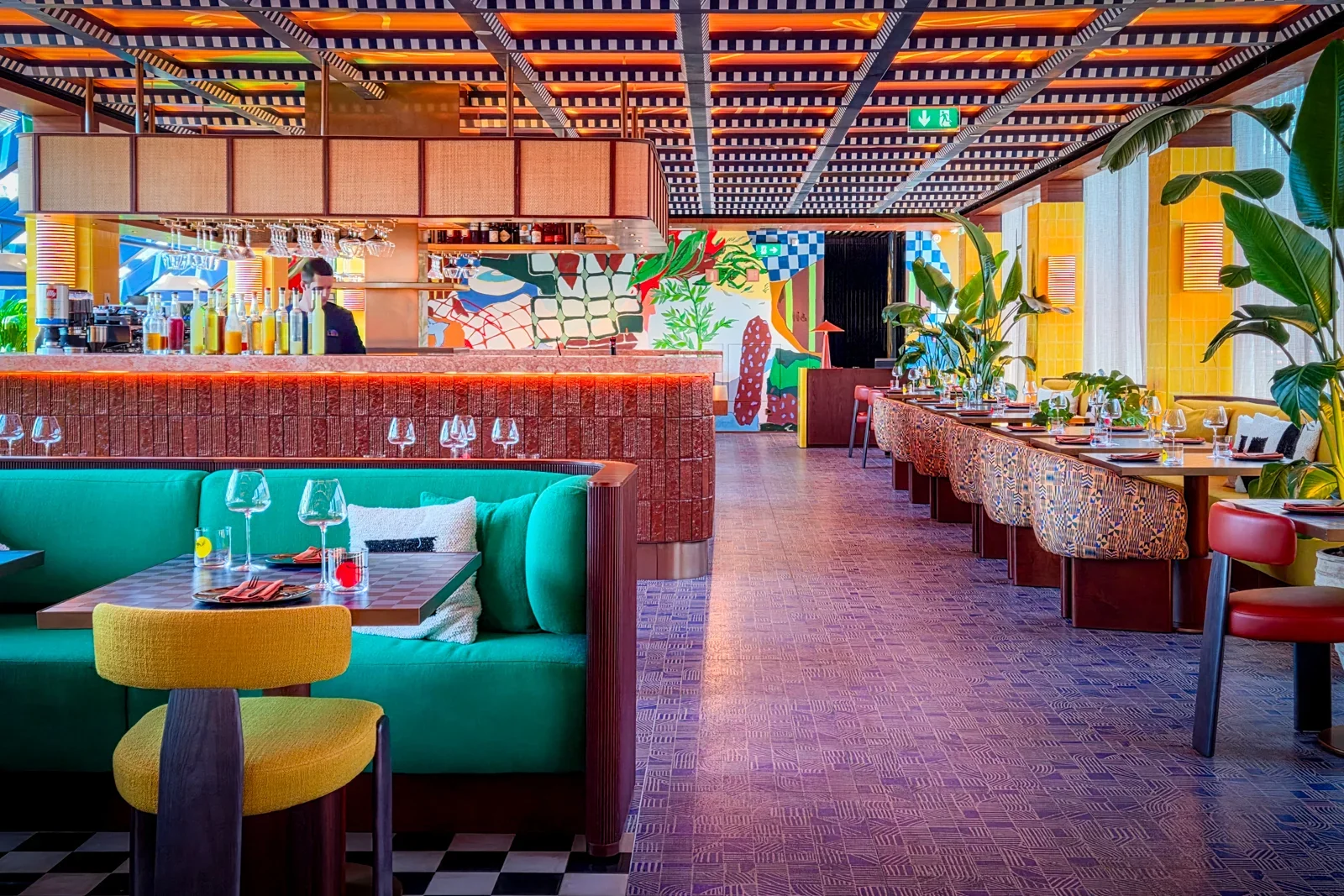
Inside, Patricia Urquiola takes a different approach to the familiar Portuguese design vocabulary. Lioz stone, cork, azulejos, cement tiles, wood, and ceramics appear throughout the property, but are reinterpreted through contemporary colors, textures, and furniture.
The result moves away from the predictable visual language often associated with Portuguese hospitality. There is no attempt to recreate a traditional Lisbon interior. Instead, familiar materials become part of a more international design language, with bold colors, bespoke furniture, and contemporary artworks.
Art advisor Federica Sala helped develop the hotel's collection, incorporating works by Portuguese and international artists. The intention is for the artworks to form part of the architecture and its cultural narrative, rather than simply fill empty walls.
A more complex interpretation of Portuguese identity
Perhaps the most interesting aspect of the project is that its references extend beyond Portugal itself. Urquiola draws on the country's historical connections with Mozambique, Angola, Cape Verde, Goa, Brazil, Japan, and Macau.
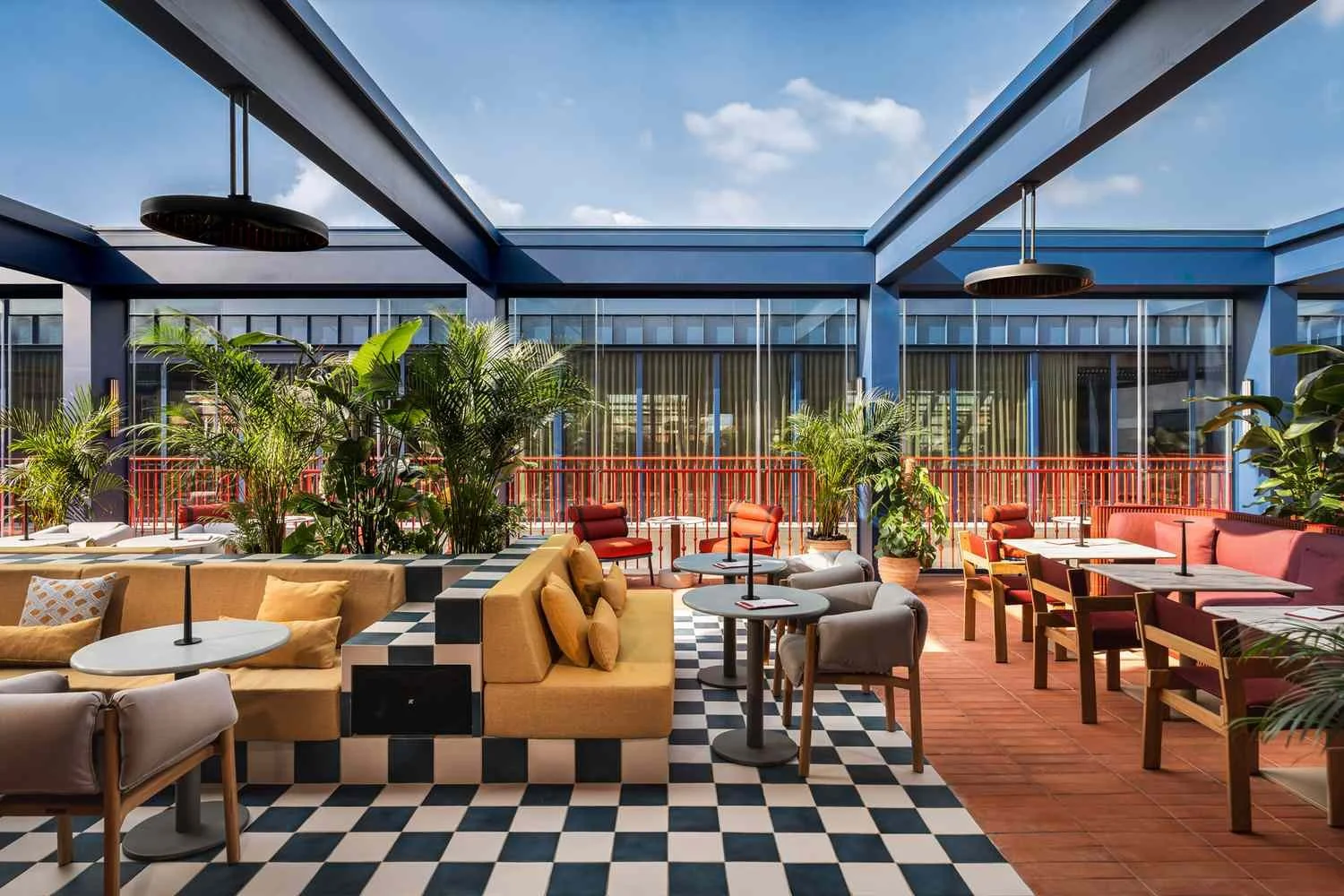
This is particularly evident at Luzzi, the hotel's rooftop restaurant, where the design brings together references to Portugal's maritime history and its wider cultural influences. Blue flooring evokes the ocean connecting these geographies, while African-inspired patterns, expressive colors, and layered decorative elements create a distinctly different atmosphere from the hotel's more intimate interiors.
Luzzi was also named Global Category Winner in the Rooftop category at the 2026 Restaurant & Bar Design Awards, recognizing the strength of the restaurant's spatial concept.
This broader interpretation of Portuguese identity is an interesting departure from the tendency to reduce local design to a recognizable collection of motifs. Portugal's cultural history is considerably more complex, and the project makes an attempt to reflect that.
Design as part of the hospitality experience
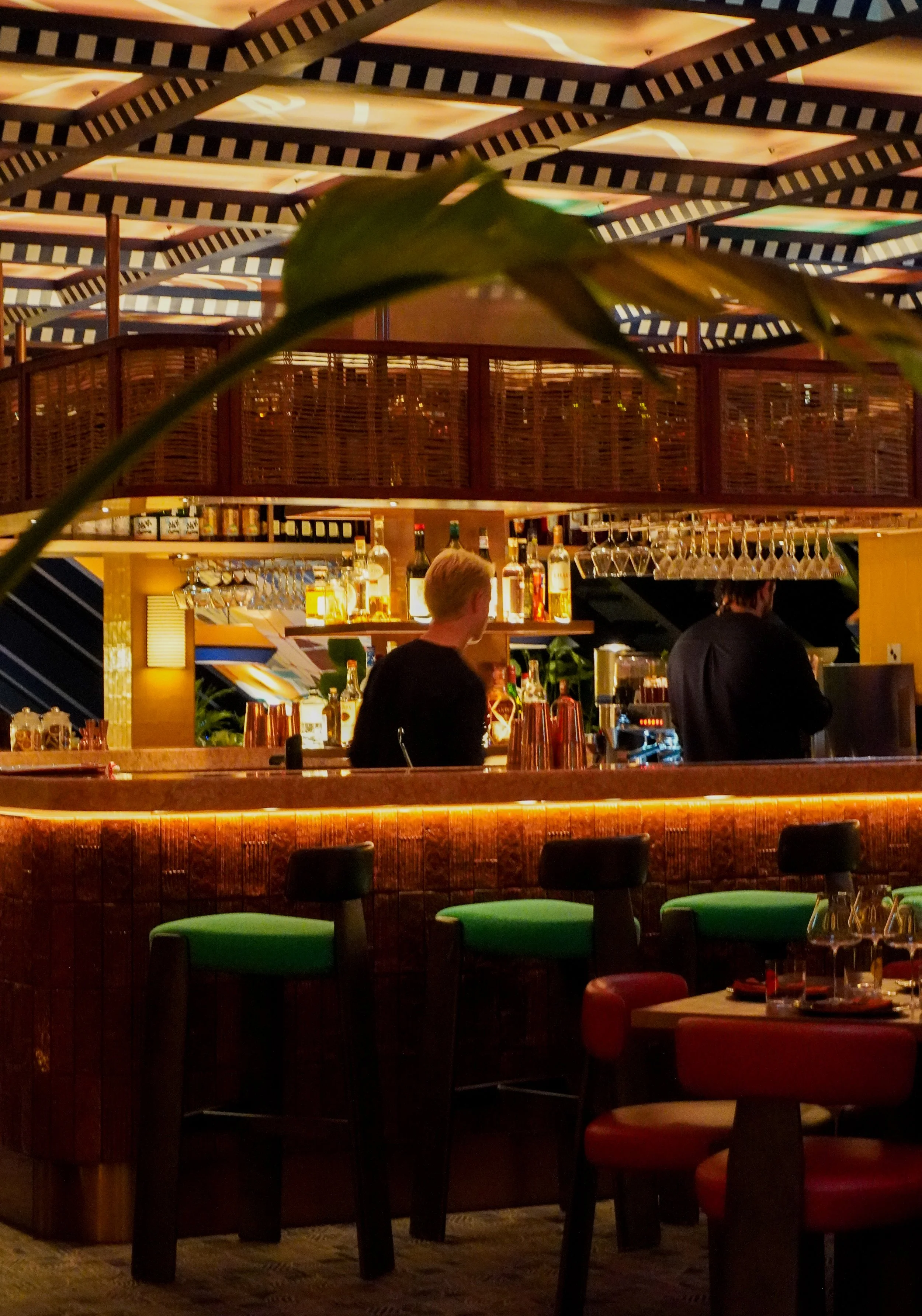
At Brava, we recently brought together investors, founders, and industry leaders from across the hospitality sector at Andaz Lisbon for an industry gathering in October. It was an opportunity to experience the property as more than a hotel and to connect with the people shaping the future of the industry.
Because hospitality design is ultimately about more than aesthetics. The strongest spaces create an atmosphere that encourages people to stay, interact, and return. Restaurants, lounges, and shared spaces can become destinations in their own right, attracting a community that extends beyond hotel guests.
Andaz Lisbon's recognition is a welcome addition to the city's hospitality landscape. But its most interesting contribution may be the design conversation it opens: how can international hospitality bring together local heritage, contemporary creativity, and a genuinely distinctive sense of place?