A product name can seem like a small detail. But for a global fashion retailer, it can carry cultural meaning that extends far beyond the product description. Zara has learned this after facing criticism from Hindu representatives over a $399 cowhide mat marketed as a yoga accessory. Its response was to apologise and change the name. The mat is now being sold as a gym mat.
The campaign was led by Rajan Zed, president of the Universal Society of Hinduism, who argued that the product brought together two things of religious significance: cowhide, given the sacred status of cows in Hinduism, and yoga, a discipline with deep roots in Indian spiritual traditions. In an email to Zed, Inditex apologised for what it described as a misunderstanding, saying the company was committed to respecting different beliefs and cultures.
The product’s name has since changed from “Foldable Leather Yoga Mat” to “Foldable Leather Gym Mat”. In Spain, it is listed through Zara Home at €199. There is, however, no indication in the reporting that the material itself has changed or that the product has been withdrawn.
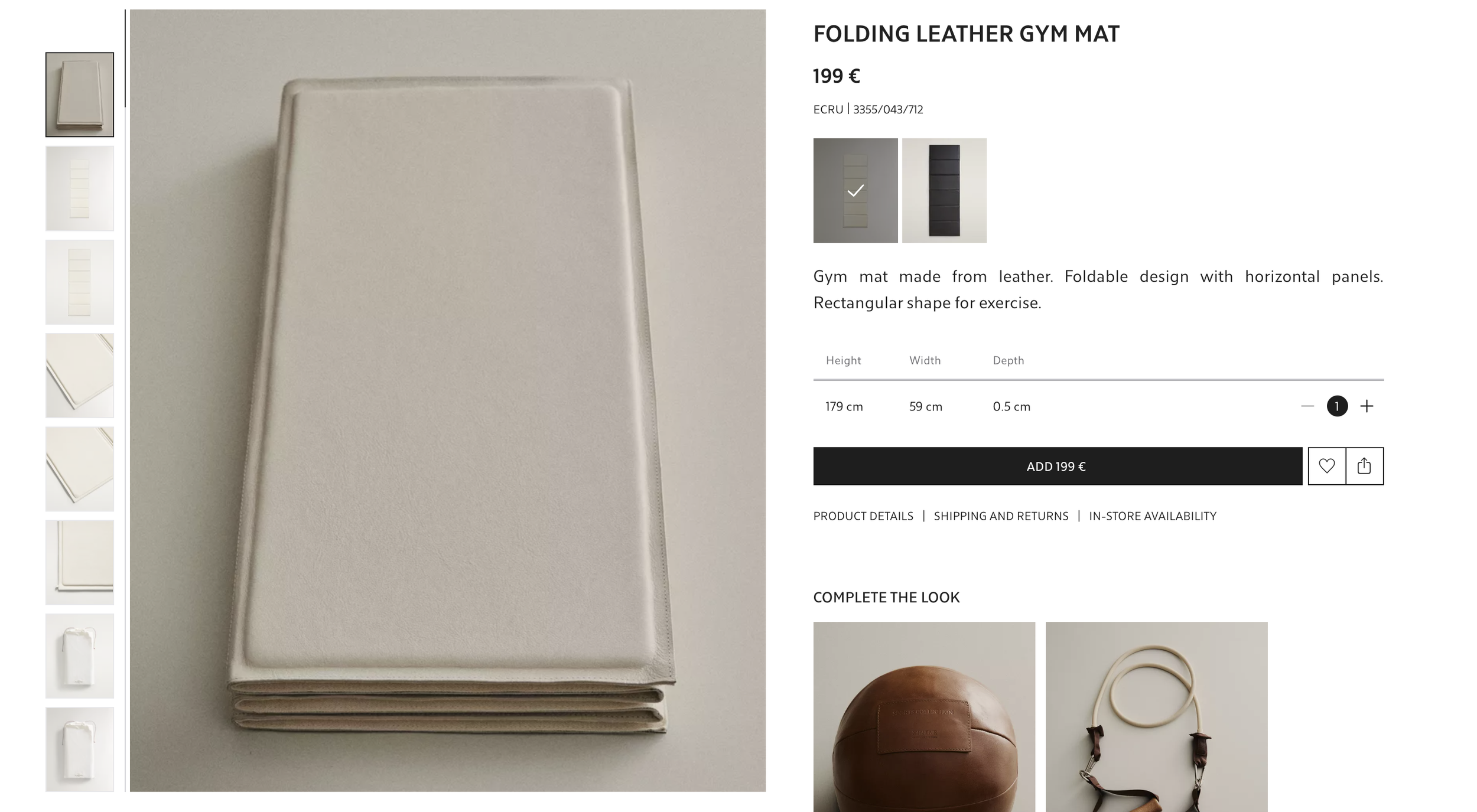
And that is where the story becomes more complicated.
Yoga has become a global wellness industry, increasingly detached from the philosophical and spiritual traditions from which it emerged. Its modern commercial interpretation often centres on exercise, aesthetics and lifestyle products. That transformation has created a vast market, but it also raises questions about what happens when cultural practices are repackaged for global consumption without sufficient understanding of their origins.
This is not to suggest that every yoga product must follow one religious interpretation, or that all Hindu practitioners share identical views. But the criticism points to a specific cultural sensitivity that a product development process should have been able to anticipate.
Changing the word “yoga” to “gym” may address the particular association that prompted the complaint. It does not, on its own, demonstrate a deeper understanding of why that association was considered offensive.
For Zara, the incident is a reminder that operating across cultures requires more than translating product descriptions or responding once criticism becomes public. Brands increasingly sell products connected to rituals, identities and traditions that cannot always be reduced to lifestyle categories.
The question is not whether a brand can rename a product quickly. It is whether it understands what it is selling before it puts the product on the market.